Laser Dentistry
in Manhattan, NY
Laser dentistry supports our philosophy of doing only what is necessary and preserving as much healthy tissue as possible. By combining advanced technology with conservative treatment principles, we can often provide more precise care, greater comfort, and faster healing.
If the fear of dental treatment has been coming in the way of your good oral health and smile, worry no more! Thanks to laser dentistry, you can say goodbye to your fear of dental treatment by taking the Best Dentist NY. Not only this, but laser dentistry also offers numerous benefits that have entirely revolutionized dental treatment worldwide. In fact, we can safely say that lasers are the future of minimally-invasive and preventive dentistry. So, what is laser dentistry, and how can you benefit from it? Continue reading to find out more.
Laser‑Assisted
Dentistry
How Laser Treatment Is Planned
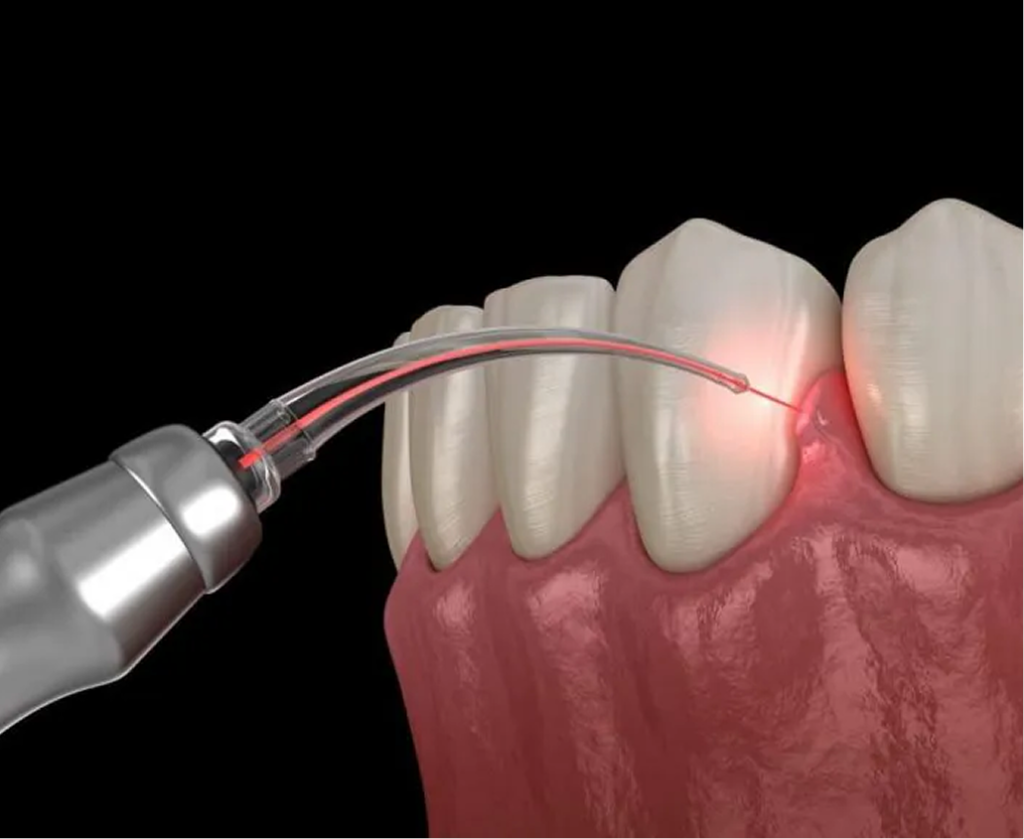
Planning begins with identifying whether the condition benefits from laser precision. Digital imaging and clinical evaluation determine tissue thickness, inflammation, and the extent of bacterial involvement. The laser setting is selected based on the type of tissue and the goal of the procedure—contouring, disinfecting, reshaping, or relieving sensitivity. Planning includes:
- Soft‑tissue evaluation
- Digital imaging
- Inflammation assessment
- Laser setting selection
Tissue Preservation and Precision
Laser dentistry allows treatment with minimal disruption to surrounding tissue. The laser seals blood vessels as it works, reducing bleeding and swelling. Because it targets only the affected area, healthy tissue is preserved, and healing begins immediately. Many procedures require no sutures and result in less postoperative discomfort.
Dr. Toksoy’s Approach
This approach supports conservative restorations designed to reduce stress concentration and preserve remaining tooth structure whenever possible.
- Selects laser settings based on tissue type and treatment goals.
- Uses laser energy to disinfect, contour, or desensitize with minimal trauma.
- Ensures soft‑tissue healing aligns with esthetic and functional outcomes.
Natural Healing and
Reduced Inflammation
Natural Function and Structural Integrity
Biomimetic restorations are designed to move, flex, and distribute forces like natural enamel and dentin. Layered materials replicate the tooth’s internal architecture, allowing the restored tooth to function more predictably under everyday load. This reduces the likelihood of cracks, sensitivity, and catastrophic failure.
When Laser Dentistry Is Recommended
Suitable for:
- Gum contouring
- Frenectomies
- Cold sore treatment
- Gingivitis and
- periodontal therapy
- Bacterial reduction
- Cavity detection
-
Desensitization of
sensitive teeth - Soft‑tissue reshaping
Not recommended for:
- Deep structural decay
- Severe periodontal bone loss
- Cases requiring extensive surgical access
Digital Diagnostics and
Laser Systems
- Digital photography
- iTero scanning
- Soft‑tissue mapping
- Laser disinfection systems
-
Laser contouring and
desensitization modes
Your Laser Visit
Laser treatment is completed in three clear stages designed to improve comfort and healing.
Evaluation
Treatment
Healing Check
Principles Guiding Our Approach to Laser Dentistry
Precision Treatment
Reduced Trauma
Enhanced Healing
Integrated Diagnostics